A classroom study tied block building to better math scores, and building sets are up 22%. Here is what the research does and doesn’t show, with Magformers’ new magnetic sets and Little Pim’s language videos for kids under 6.
By Laura N. Larsson · November 2026 · Facts checked Nov. 1, 2026
Disclosure: This is free editorial. No company named here paid for this article, sent samples or was interviewed for it, and nothing here is a quote from any of them. We have not play-tested these products. Company facts come from each company’s own website or public filings; market and tariff facts come from the sources listed at the end. Everything was checked on Nov. 1, 2026. Some companies named here have advertised with ToyDirectory.com or TDmonthly in the past; that did not affect this coverage.
Parents of young children are paying more for toys they believe will teach something. Through April 2026, Circana saw toy shoppers move toward mid-tier and premium price bands, while cheaper items lost ground. Building sets rose 22% in the first half of the year. So it is worth knowing what the research actually says, both to answer parents honestly and to avoid overselling.
The numbers
Building sets, January–June 2026: +22%
Price trend: shoppers moving to mid-tier and premium price bands
Sources: Circana, June 15 and Aug. 12, 2026.
What the studies found
Block building and math. A study in the journal Mind, Brain, and Education, published June 2025, tested a six-week block-building program led by classroom teachers for 6- and 7-year-olds. 409 children did the training and 103 formed a comparison group. The children who built did better than the comparison group in spatial skills and in math, but not in spatial language. The study did not randomly assign children, and it used LEGO bricks, not magnetic tiles. Still, it is good classroom evidence that building from picture instructions helps with math.
Magnetic blocks and creativity. A 2026 case study presented at an academic conference observed 15 children aged 5 and 6 in one kindergarten in Indonesia playing with magnetic building blocks. Based on observation and interviews with teachers and parents, the researchers reported gains in six areas of creativity, including problem-solving and persistence. It is a small qualitative study with no comparison group. Treat it as encouraging, not as proof.
Magformers: new sets for 3- to 5-year-olds
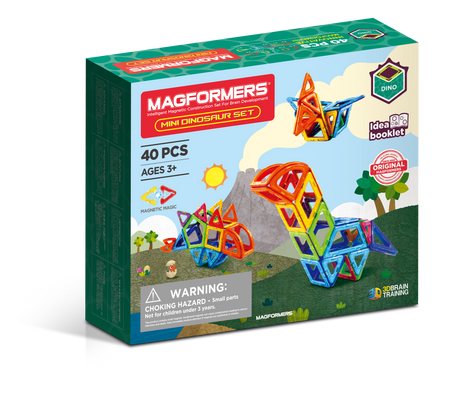
A Sept. 16, 2026, trade post from Magformers on brandora, a German toy-industry news site, says its 2026 new sets are in stock and that its main audience is children aged 3 to 5. The featured set is the Amazing Builders Set: 25 pieces, including giant wheels, a construction-worker figure and a driver’s cockpit for building construction vehicles, for ages 3 and up. Magformers’ German shop also lists Dino Paradise, Mini Dino, Idea Pop, Star Wheel and Mini Plus sets. These listings are from Germany; we did not confirm which of these sets are sold in the U.S.
Little Pim: five-minute language videos for little kids
Little Pim sells an online subscription of short, five-minute language videos for babies, toddlers and preschoolers, taught by a cartoon panda. Its website lists 12 languages: Spanish, French, English/ESL, Mandarin Chinese, Italian, German, Japanese, Arabic, Hebrew, Russian, Korean and Portuguese. It says the program covers 360 basic words and phrases, has no ads, and comes with parent and teacher guides. For a store, it is an example of how a learning brand can sell to parents who want screen time to teach something.
What to do with this
Say what the research shows, and no more. “A classroom study linked block building to better math scores” is accurate. “Magnets make kids smarter” is not.
Include the instructions. The math study used building from pictures. Sets that come with idea booklets match that best.
Group by age. Put the 3-to-5 sets together, so parents see a clear starting point and what to buy next.
Pair blocks with something to say. A building set next to a first-words or language product makes an easy “learning gift” display for grandparents.
Tariff note: this piece covers research, not trade. For the current U.S. tariff tiers on toys, see the tariff check in our other November trend articles.
Tariff information is general news, not legal or customs advice. Rates depend on each product’s classification and country of origin; check with a licensed customs broker before you price an order.
Free editorial: No company named here paid for this article.
Free toy industry news by email
New toys, trends and industry news from The ToyDirectory Intelligence Report.
Free to join on Substack; a paid plan is optional. Unsubscribe anytime.
Writer's Bio: Driven by a fascination with how young people learn, grow, and connect, Laura N. Larsson has spent years researching the role of play and social media in child and adolescent development. Since 2012, she has combined her ecommerce background with in-depth interviews of children and teenagers, producing insightful articles that explore the evolving interplay between play, communication, and online interaction. Read more articles by this author



 Writer's Bio: Driven by a fascination with how young people learn, grow, and connect, Laura N. Larsson has spent years researching the role of play and social media in child and adolescent development. Since 2012, she has combined her ecommerce background with in-depth interviews of children and teenagers, producing insightful articles that explore the evolving interplay between play, communication, and online interaction.